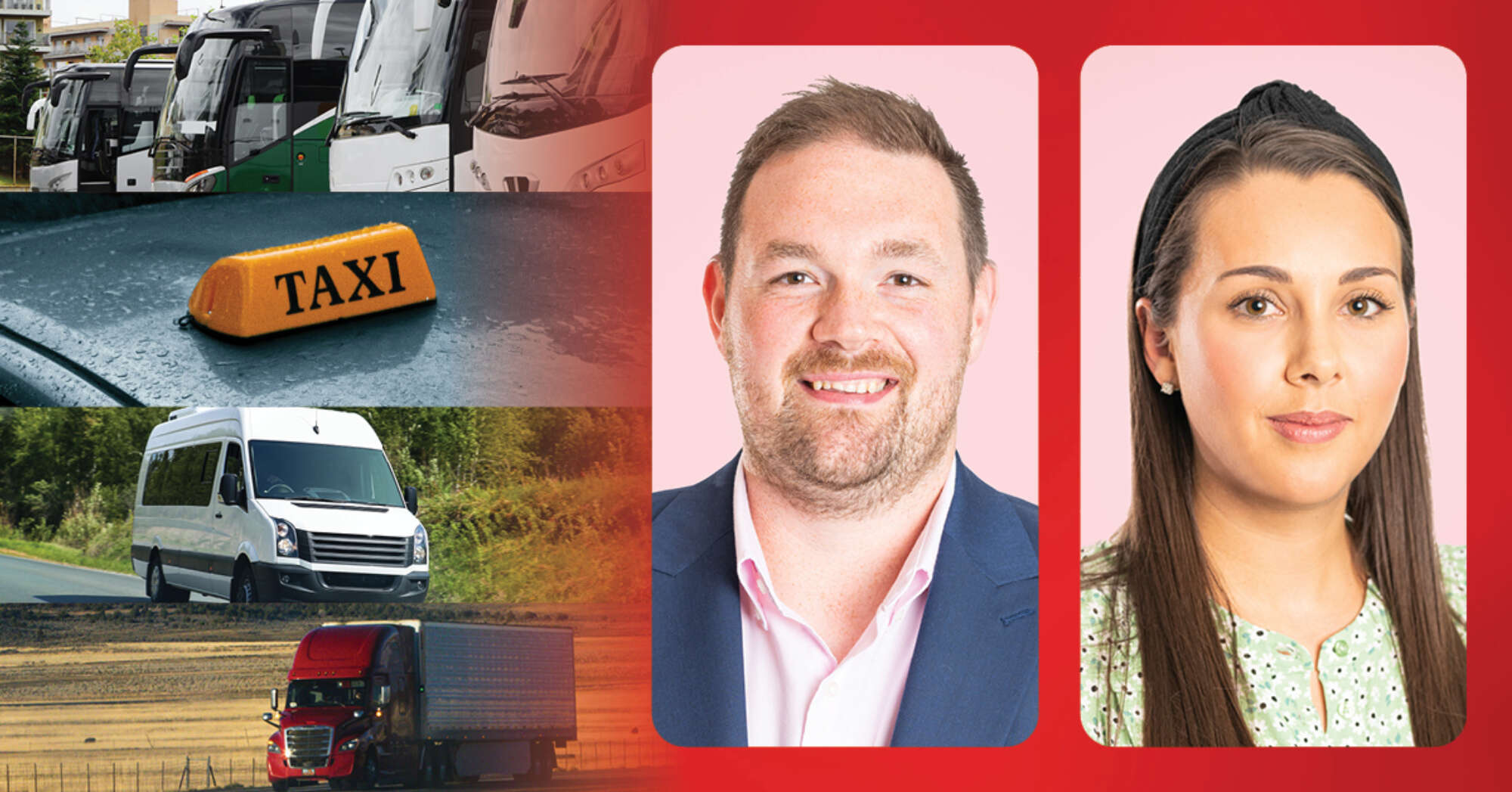
There’s been some changes within the ERS Commercial Motor team recently so we caught up with Alexandra Carroll and James Hayward to talk through what’s happening behind the scenes, how the structure is evolving, and what brokers can expect.
There have been a few changes across the Commercial Motor team, can you sum up the new structure and what it means in practice?
Following James Mann’s departure, it gave us a natural opportunity to step back and review how we were structured across Commercial Motor. Rather than simply replacing like for like, we looked at how we could strengthen the team’s expertise and create a more cohesive operating model.
As a result, we’ve brought Passenger Carrying Vehicles (PCV) and Goods Carrying Vehicles (GCV) together under one unified Commercial Motor portfolio.
In practical terms, that means we’re now operating as one joined-up team rather than two parallel ones. It allows us to pool expertise across the class, with underwriters sharing insight, broker relationships and technical experience more fluidly.
For brokers, this translates into greater consistency, stronger technical depth across products, and a team that can assess risks through a broader, more commercial lens. It’s about being more aligned internally so we can be clearer, faster and more confident externally.
With Scott Tillbrook in his new role as Active Underwriter and Chris Wilson stepping in as Head of Class, how does this strengthen the Commercial Motor proposition?
Scott stepping into the Active Underwriter role and Chris leading the class gives us clearer direction across both Commercial Motor and Fleet.
There have historically been small differences in appetite or features and benefits between the two areas. Bringing the leadership together helps remove that friction and ensures we’re moving forward with one Commercial Lines strategy.
It’s about alignment, clarity and making sure brokers experience a consistent approach.
You’re both now managing the teams and products day to day - how will that work and what should brokers expect?
From a broker perspective, very little has changed day to day.
You’ll still deal with the same underwriters. Service levels remain the same. Access remains the same. We’re still very much open to picking up the phone and talking through risks.
The structural change sits behind the scenes, it’s about strengthening how we operate, not changing how you trade with us.
James, as Product Manager across both Commercial Motor and Passenger Carrying Vehicles, will this benefit brokers?
Absolutely. Bringing product oversight together means we can look at the portfolio as a whole rather than in segments.
That helps us ensure appetite, wording and pricing direction are aligned. For brokers, it creates a more joined-up experience, particularly where risks don’t sit neatly in one box.
It’s about consistency and fewer grey areas.
Alexandra, as Senior Trading Underwriter for the portfolio, where is your focus right now?
Right now, the focus is clarity and confident trading.
We’re making sure our appetite is clearly understood internally, our pricing approach is aligned and decisions are made efficiently. By working closely across Commercial and Fleet, we’re able to sense-check decisions and support brokers with a clearer view of where business fits.
Ultimately, that supports quicker conversations and more decisive outcomes.
Should brokers expect any changes to appetite, service or decision-making?
In the immediate term - no.
We’re trading as we always have. Same appetite. Same access. Same service levels.
What this change does, is give us a stronger platform for the future. As we continue to invest in digital trading and underwriting capability, having a unified Commercial team allows us to evolve in a coordinated way rather than in silos.
So today is consistent. Tomorrow is more streamlined.
We mentioned aligning Fleet and Commercial over time at ERS Live - what’s the longer-term thinking?
There’s a natural overlap between single vehicle Commercial risks and larger Fleets. Brokers don’t see them as completely separate worlds, and increasingly, neither do we.
By aligning the teams under shared leadership, we can gradually bring appetite and pricing direction closer together. Over time, that should mean fewer gaps and a smoother journey as clients grow from one vehicle to many.
The goal is simple: wherever your motor risk sits, there’s a clear home for it within ERS.
If you had one message for brokers right now, what would it be?
Commercial Motor might be becoming more digital, but it’s still a people business.
Our products are backed by specialist underwriters who want to speak to brokers, understand the nuances of a risk and build long-term relationships. That doesn’t change.
What excites you most about the year ahead?
There’s a real opportunity to build on a strong foundation.
We already have a well-established Commercial Motor proposition. Bringing the teams together gives us the chance to refine it, strengthen strategic broker relationships and make ERS Commercial an even more natural first choice on panels.
There’s momentum and that’s exciting.